
Serving Indigenous Peoples of Brazil
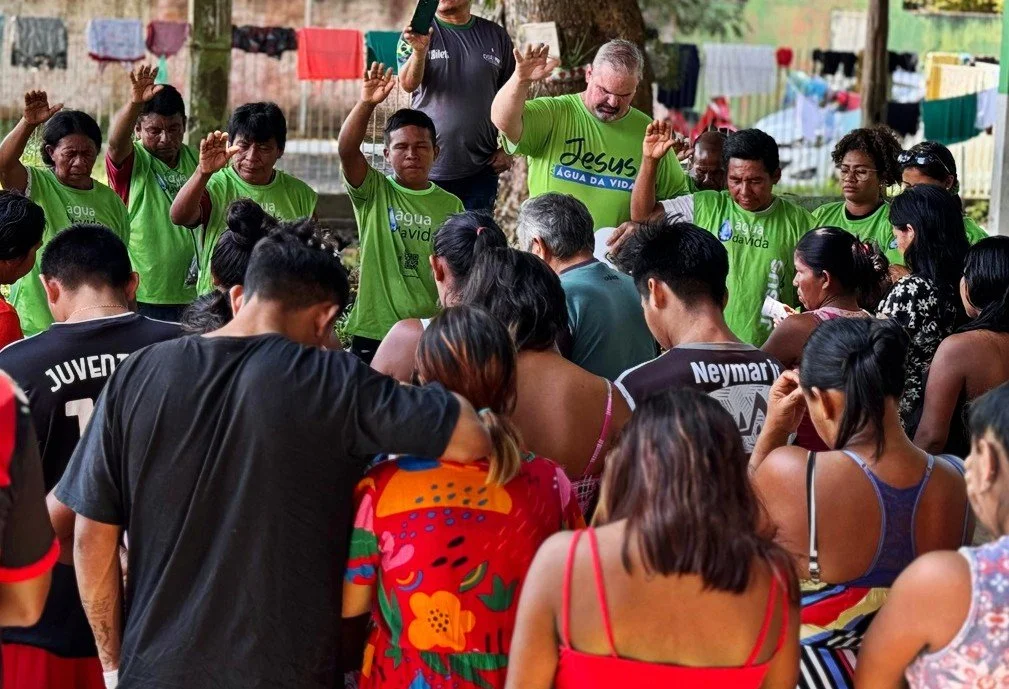
I clearly remember how uncomfortable it was to be among hundreds of people, listening to everyone speak and sing in a language I didn't understand. I knew a few words, and could even babble a few sentences of the praises, but I did not fully understand what was being communicated.
This happened almost a year ago, when I had the privilege of participating in the IV Lausanne Congress for World Evangelization, in Seoul, South Korea. This uncomfortable experience automatically reminded me of my experience working with my brothers and sisters of the Sateré-Mawé people since 2018.
With every encounter with my Sateré brothers and sisters at the seminary where they are trained, I am surprised and encouraged by their faith and the neccessity of training indigenous leaders to reach their own people.
Whether it's when they leave their communities to attend seminary classes in Parintins every two months, or when I have the opportunity to go to them, either way the trip is a long twenty hours of travel on the river.
The first thing that surprised me about this relationship was realizing the importance of knowing in depth the culture and language of the people you want to serve. Of course, we hear this in missiology courses, but in practice, it is very different.
The Sateré have long maintained a close relationship with non-indigenous people and have carried out an intense flow between their communities and nearby cities. Although many understand Portuguese, many don't master it — especially the older students who still live in the communities.
The first time I met the Sateré seminary students, I started asking questions about the class content, but many couldn't express what they understood. I realized that we weren't considering this important cultural factor, and communication was compromised, since everything was in Portuguese.
Therefore, we began the process of translating teaching materials into the Sateré language and created a separate class, with a native teacher, so that they could receive instruction in their own language. We have also begun to include Sateré students in the liturgies of Sunday services, where they share testimonies and praise God in their native language.
Over the past three years, the indigenous brothers have also begun participating in the evangelization campaign we carried out during the Festival dos Bois in Parintins — a folk festival in the region that attracts tourists from different parts of Brazil and other countries.
Even without mastering Portuguese, as is the case with most of our students, they accepted the challenge of taking to the streets to talk about salvation in Jesus. Many tourists are surprised to find an indigenous person sharing, in his mother tongue, how Jesus transformed his life.
When I had the idea of putting them on the streets to evangelize, I imagined they might express resistance because of the language barrier, but at no point did they show discouragement or shame. Portuguese-speaking Sateré serve as interpreters for those who cannot communicate in that language, so the students announce the plan of salvation and pray with people in the streets, boldly and courageously.
I have been amazed at the commitment and dedication of the Sateré brothers to the Word and work of God. They face many limitations — geographical, financial, infrastructure. Whenever they can, they bring cassava flour, tapioca, banana and other products from their plantations to share with the other seminary students. Brother Aristides, a 70-year-old Satere elder, walks for hours through the forest and then travels another fifteen hours by boat to attend our classes.
We have also encouraged the brothers and sisters of the Parintins church to learn about the Sateré church. Over the past two years, we have organized a team of about 35 people to participate in the Bible Day celebration that takes place every April 21st, when the Sateré church gathers in the Vila Nova I community to praise God for the day the Bible came into their language.
It's a festive weekend of gratitude for the life and work of missionary couple Alberto and Sue Graham, who translated Scripture, and at the same time, it's a time to cherish the memory, culture, and language of the people.
It is a privilege for me to participate and see up close everything the Lord has done among the Sateré-Mawé people. With each meeting and conversation, I learn to value their experiences, to respect the leadership that the Lord has raised in their communities, and to understand that God has a special and particular way of forming his Church. This leads me to give up some foreign ideas and concepts that, often, even with good intentions, we try to apply in contexts whose soil was prepared by the Creator himself to flourish in another way.
Developing this contextual and cultural sensitivity is a challenge that the non-indigenous church needs to embrace to lovingly serve the indigenous peoples of Brazil and the unreached peoples around the world. This is nothing more than treating others with the respect and dignity that God himself implanted in human beings, by creating humanity in his image and likeness.
Paying attention to this small, great detail gives us the satisfaction of looking at the other person's face – as they listen to the teaching of God's word in their mother tongue – and perceiving in their expression the unsaid: “now, yes, I understand!”.
Returning to the Lausanne experience, while I felt diminished and excluded by not understanding or being able to communicate in the official language of the event, I felt God speak to my heart: “I see you. I understand you. I understand your language and I take pleasure in being worshipped in your own language”. These words inevitably refer me to Revelation 5:6-10:
“Then, behold, I saw, in the center of the throne, surrounded by the four living creatures and the elders, a Lamb standing as if he had been killed. He had seven horns and seven eyes, which are the seven spirits of God sent to all the earth. He approached and received the book from the right hand of him who sat on the throne. Upon receiving it, the four living creatures and the twenty-four elders fell down before the Lamb. Each of them had a harp and golden bowls full of incense, which are the prayers of the saints; and they sang a new song: ‘You are worthy to receive the book and to open its seals, for you were killed and with your blood you bought for God people of every tribe, language, people and nation. You have made them a kingdom and priests to our God, and they will reign over the earth’.”
Let us praise Jesus, the Lamb of God, who created everyone with beauty and diversity, and with his blood bought us and also bought our brothers and sisters from the Sateré-Mawé people.
May the Holy Spirit teach and empower us to look at and treat indigenous peoples with the same love and value that God himself expects of us.
Interpreted from this article written by Phelipe Reis